
Round vs Square Aluminum Balusters: How to Choose the Right Profile for Your Deck
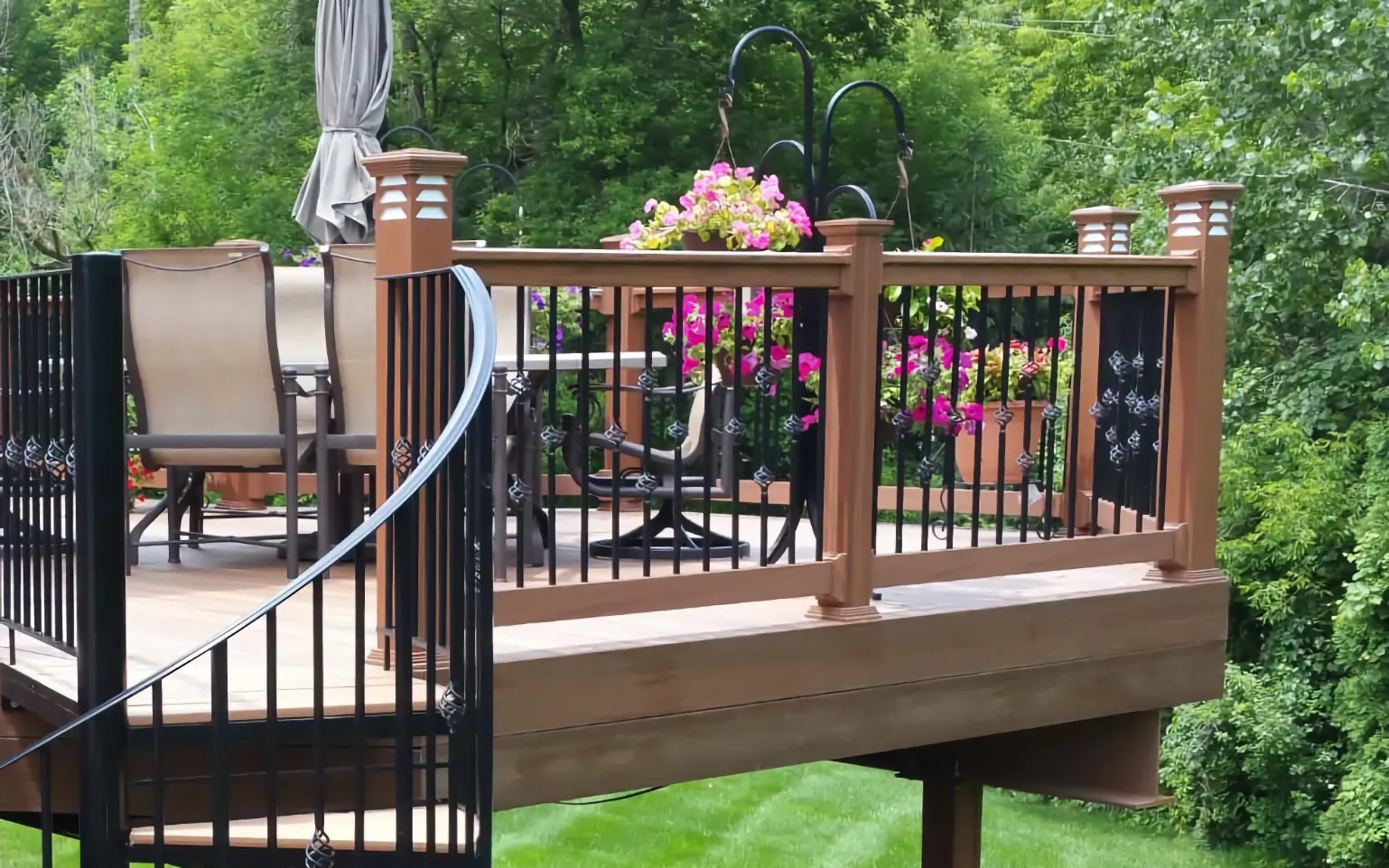
Aluminum balusters come in two main profiles: round and square. Both meet code, both last, and both look sharp on a finished deck. But they aren’t interchangeable. The profile you choose affects the visual style of the railing, the connector hardware you need, and how the finished product reads from the street.
If you’re speccing aluminum balusters for your next build, here’s how to decide between round and square.
Visual Differences at a Glance
Round aluminum balusters have a 3/4″ diameter and create a traditional, softer look. They’re the most widely used profile in residential deck construction. The curved surface catches light evenly and produces subtle shadow lines that blend into most railing systems without drawing attention.
Square aluminum balusters have a 3/4″ face and create a more contemporary, architectural feel. The flat faces produce sharper shadow lines and a more defined grid pattern. They tend to stand out more visually, which can be a positive or a negative depending on the design intent.
As a general rule: round profiles recede, square profiles assert. Choose round when the railing should complement the view. Choose square when the railing is part of the design statement.
Connector Compatibility
This is where the practical difference matters most on the jobsite.
Round balusters use the standard 3/4″ round baluster connector — a simple friction-fit shoe that snaps over the baluster end and sits flush against the top and bottom rail. These are the most common and least expensive connectors, available starting at $0.28 per piece.
Square balusters require the Estate series square connector, which has a square opening to match the profile. These run about $0.35 per piece. You cannot mix round connectors with square balusters or vice versa — the fit won’t work.
For stair sections, both profiles have dedicated stair connectors that accommodate the rail angle (typically 30-35 degrees). Make sure you order the stair version separately — level connectors don’t adjust.
Which Profile Works With Which Deck Style?
Round balusters pair well with:
- Vinyl railing systems (the most common combination)
- Traditional wood rail caps
- Composite decking with a classic aesthetic
- Homes with existing round porch or stair balusters
Square balusters pair well with:
- Aluminum rail systems
- Modern or contemporary home designs
- Horizontal deck board patterns
- Commercial or mixed-use projects
When in doubt, look at the existing architectural lines on the home. Round softens, square sharpens. Match the baluster to the character of the house, not just the deck.
Installation Differences
Both profiles install the same way: drill holes in the top and bottom rail, insert the baluster, and secure with connectors. The tools and process are identical.
The one difference worth noting: square balusters can rotate in the hole if the fit is loose. Round balusters don’t have this issue because rotation doesn’t change their orientation. If you’re using square balusters, make sure connector fit is snug and the baluster is aligned before the railing is fully secured.
For a complete walkthrough, see our aluminum baluster installation guide.
Pricing Comparison
At The Deck Barn, both profiles are competitively priced and sold by the piece:
| Profile | Starting Price | Colors Available | Custom Lengths |
|---|---|---|---|
| 3/4″ Round | $1.43/piece | 5 (Black, Bronze, White, Clay, Green) | 8″ to 95″ |
| 3/4″ Square | $2.80/piece | 2 (Matte Black, Bronze) | Standard lengths |
Round balusters offer more color options and custom length flexibility. Square balusters cost more per piece but may be the right call for projects where the modern look justifies the premium.
The Bottom Line
For most residential deck jobs, round aluminum balusters are the default for a reason: lower cost, more color options, universal compatibility, and a look that works on almost any home. Square aluminum balusters earn their place on contemporary builds where the architectural lines call for something sharper.
Both profiles deliver the same durability, weather resistance, and low maintenance that make aluminum the preferred choice for professional deck builders.