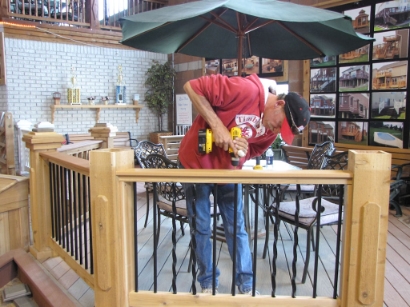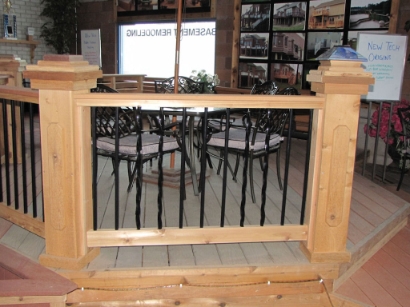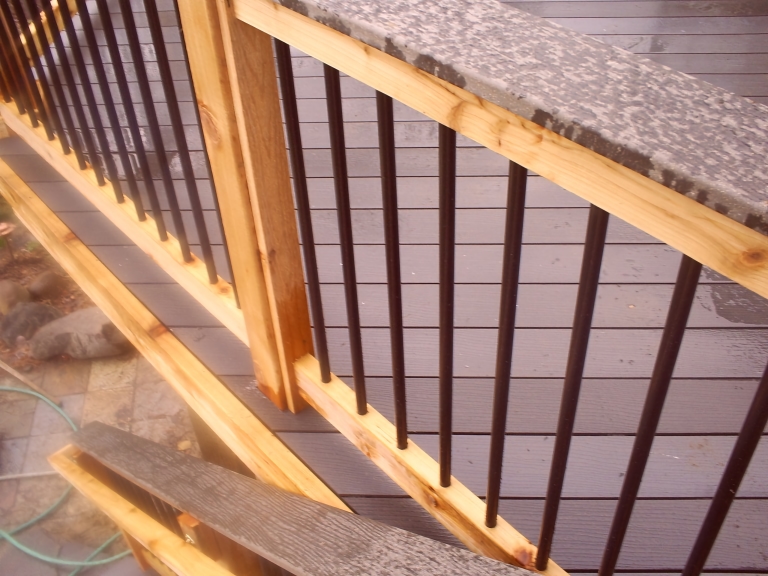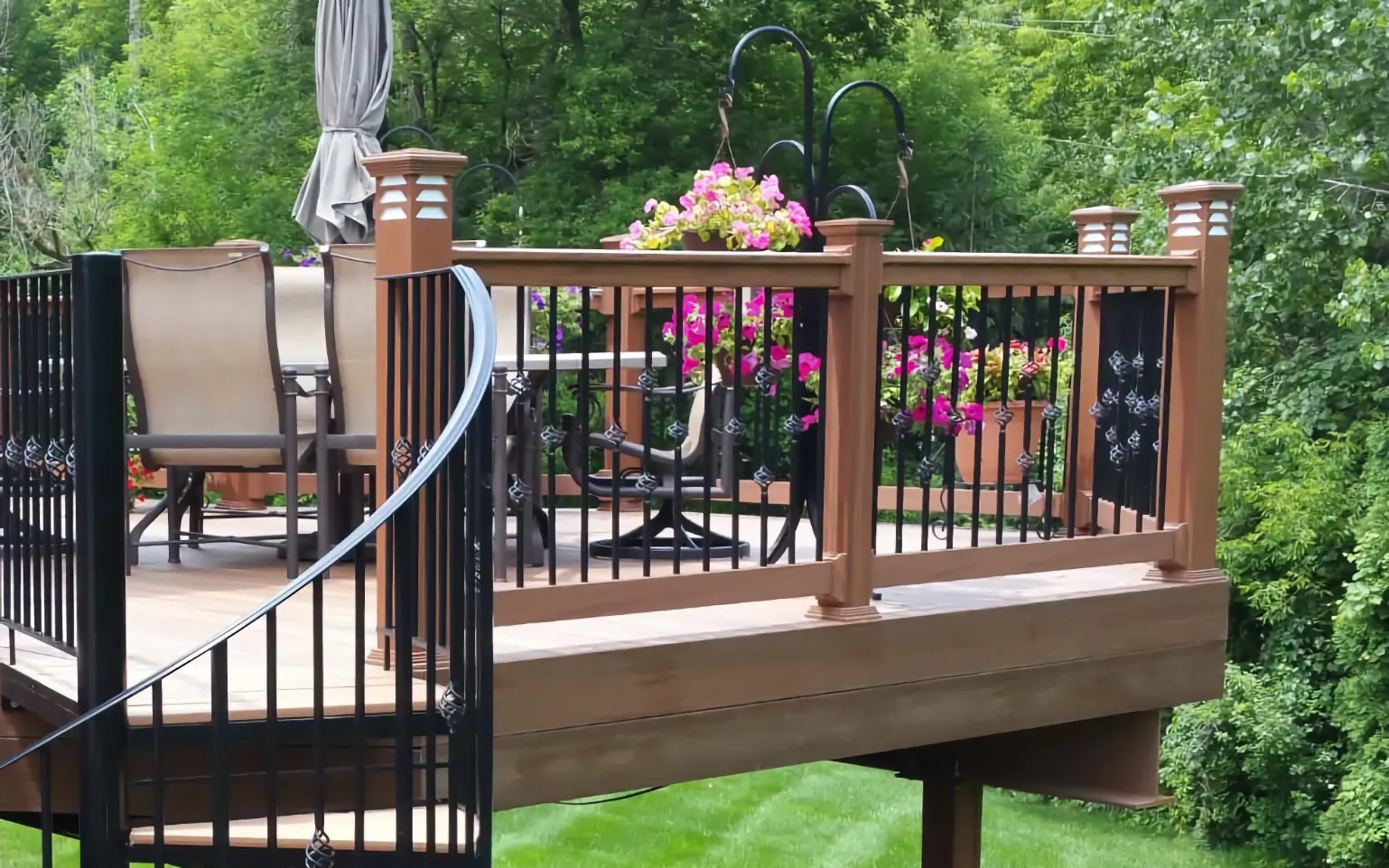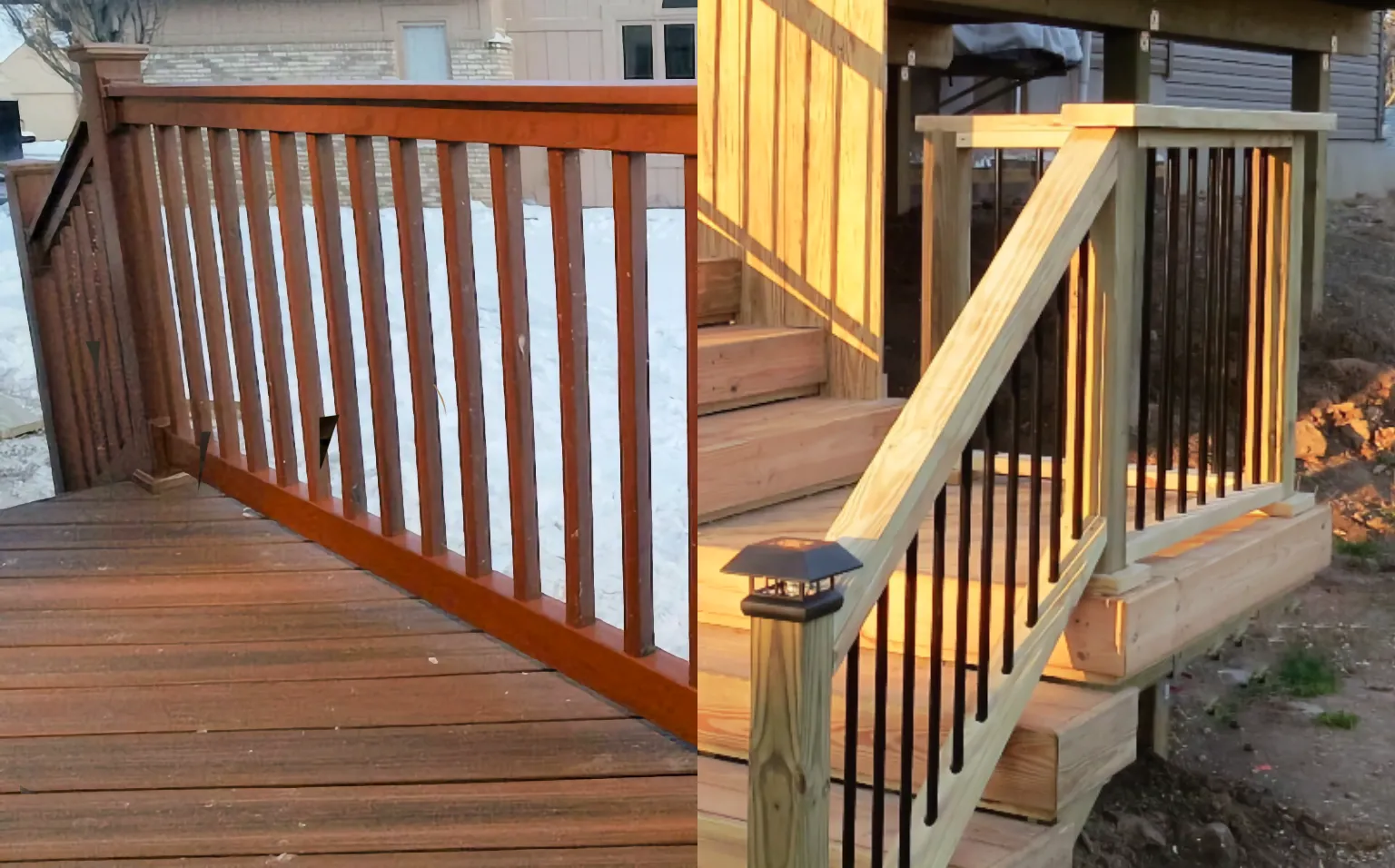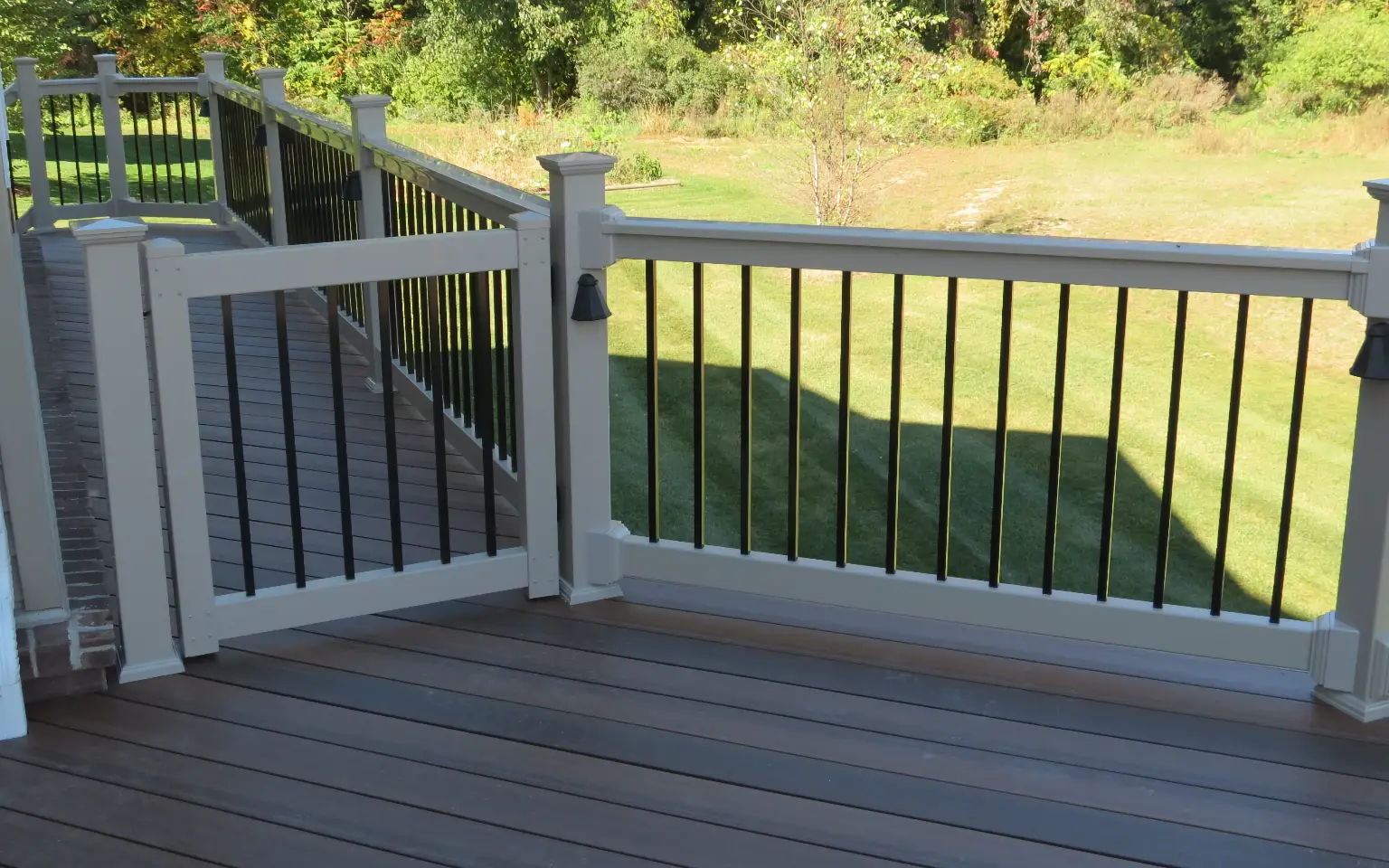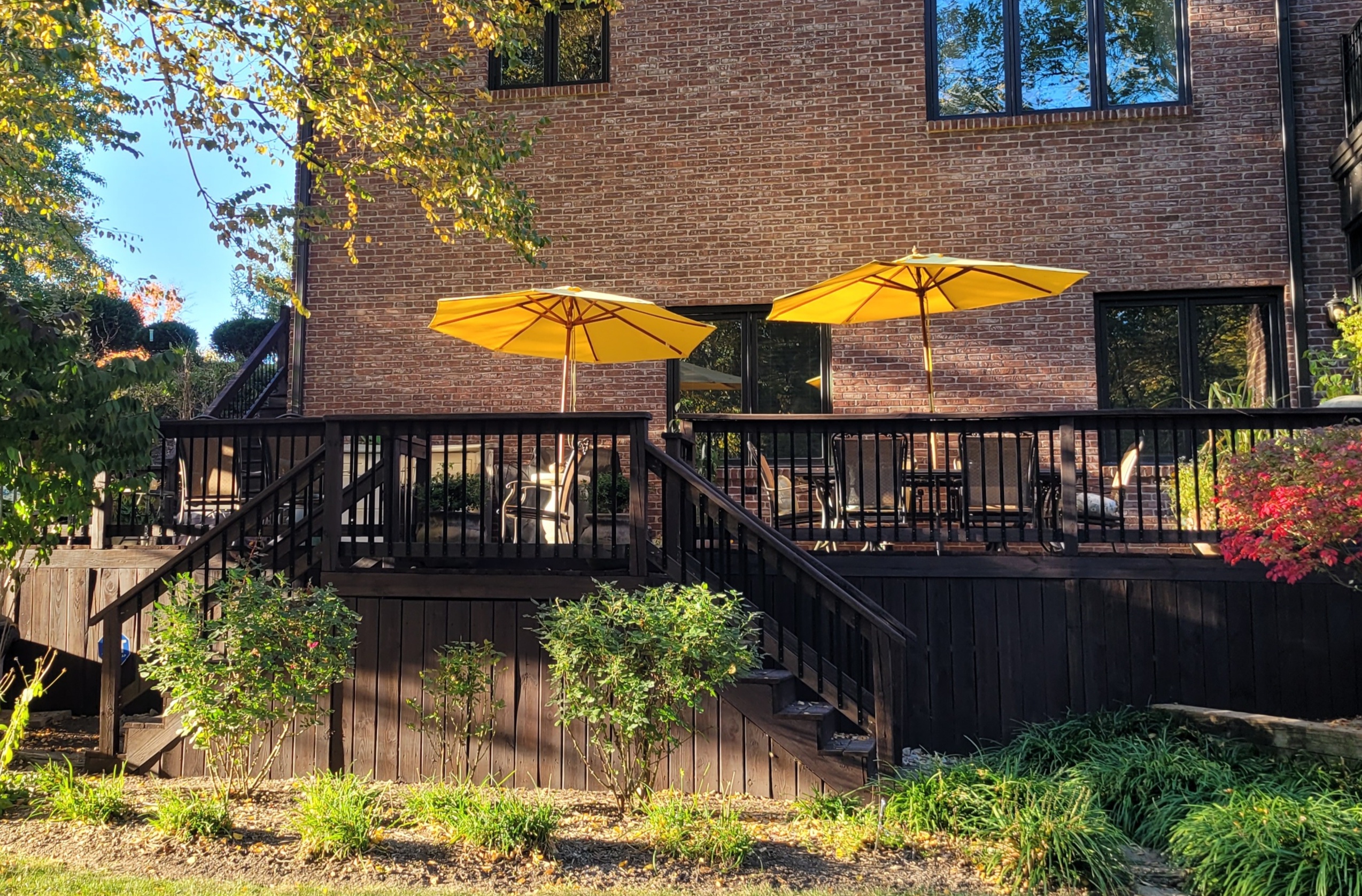
If you’ve built more than a handful of decks, you already know that balusters make or break the finished look of a railing — and they account for a significant chunk of your material time on site. Aluminum balusters have steadily replaced wood as the default choice among professional deck builders, and for good reason. They don’t rot, they don’t need staining, they install faster, and they pass code inspection without surprises.
This guide covers everything a pro needs to know about aluminum deck balusters: how they’re made, what profiles and colors are available, how they meet residential building codes, which connectors to use, and what they actually cost compared to wood and composite alternatives. Whether you’ve been specifying aluminum for years or you’re considering the switch, this is the reference you can come back to.
How Aluminum Balusters Are Made
Aluminum deck balusters are manufactured through an extrusion process. A heated aluminum billet — typically 6063-T6 alloy, the same grade used in architectural and structural applications — is forced through a steel die under high pressure. The die determines the cross-sectional shape of the baluster: round, square, flat bar, or decorative. The extruded aluminum emerges in long lengths, then gets cut to size.
After extrusion, balusters go through a powder coating process. The aluminum is first pre-treated to remove oils and contaminants, then a dry powder is applied using an electrostatic charge that bonds it to the metal surface. The coated balusters are then cured in an oven at roughly 400°F, which melts and fuses the powder into a hard, uniform finish. The result is a coating that resists chipping, fading, scratching, and corrosion far better than liquid paint.
At Dextrusions — the in-house brand we manufacture at The Deck Barn — our balusters are made from 6063-T6 aircraft-grade aluminum and carry a 20-year powder coat finish warranty. Because we extrude and coat in-house, we control quality from raw billet to boxed product.
Aluminum Baluster Profiles
The profile you choose affects the look of the finished railing, the type of connectors you’ll need, and how the baluster mounts to the rail. Here’s what’s available.
Round Balusters
The most popular profile in the industry. A standard 3/4″ diameter round baluster works with nearly every wood and vinyl railing system on the market. Round balusters have a clean, traditional look that complements both colonial and contemporary deck designs. They’re the default spec for most residential deck jobs. For a deeper comparison with other profiles, see our post on round vs. square aluminum balusters.
Square Balusters
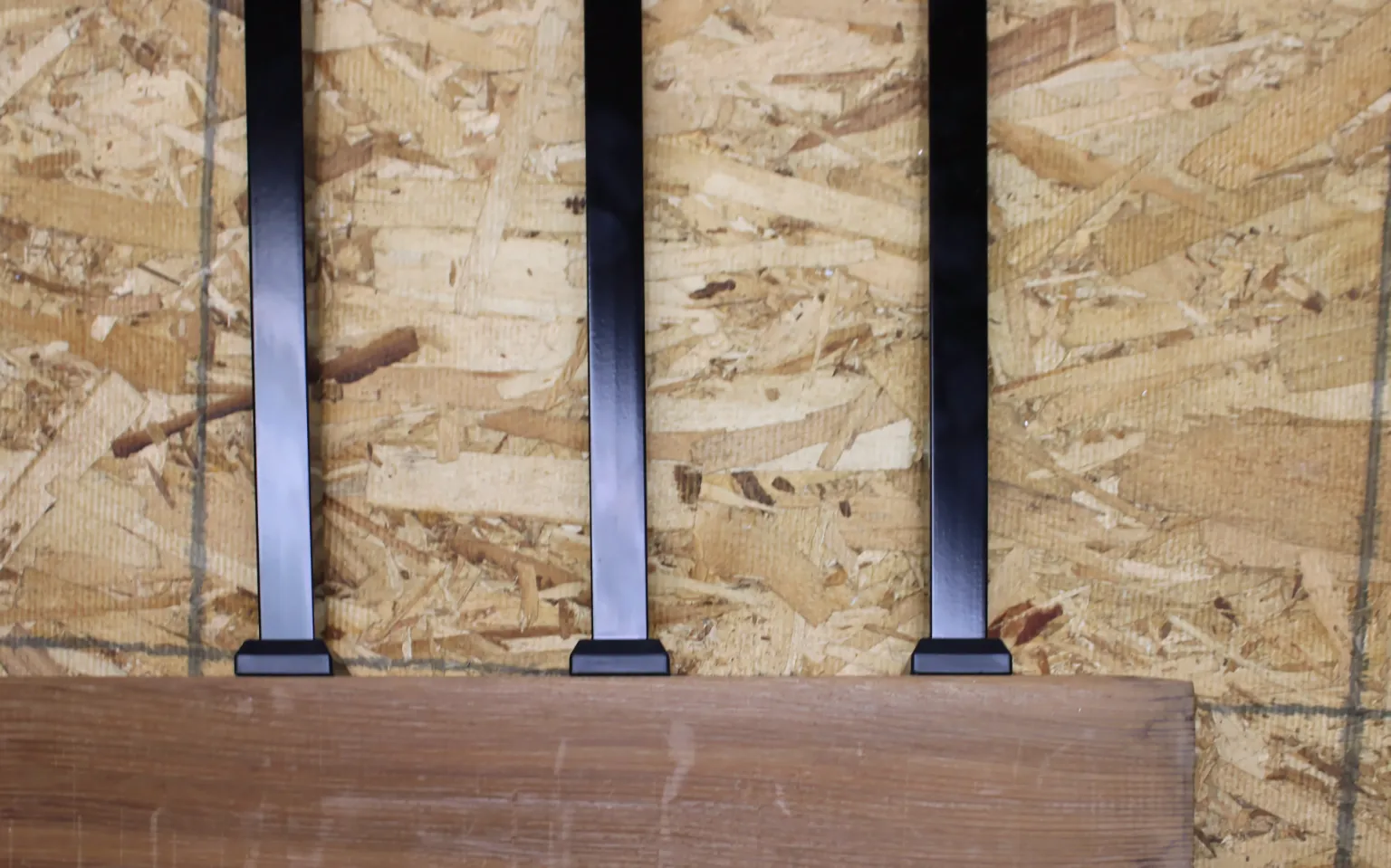
Square balusters — typically 3/4″ x 3/4″ — offer a more modern, angular look. They’re popular on decks paired with composite or PVC railing systems where the homeowner wants clean lines. Square profiles use a different connector (a square shoe rather than a round grommet), so make sure your hardware matches.
Flat Bar Balusters
Flat bar balusters are solid aluminum — commonly 3/16″ x 1″ — and face-mount directly to the rail with screws through pre-drilled holes. They create a distinctive, contemporary look that stands out from the standard round or square options. Flat bar is heavier per piece than hollow profiles, and installation is slightly different since you’re face-mounting rather than inserting into connectors.
Decorative Balusters
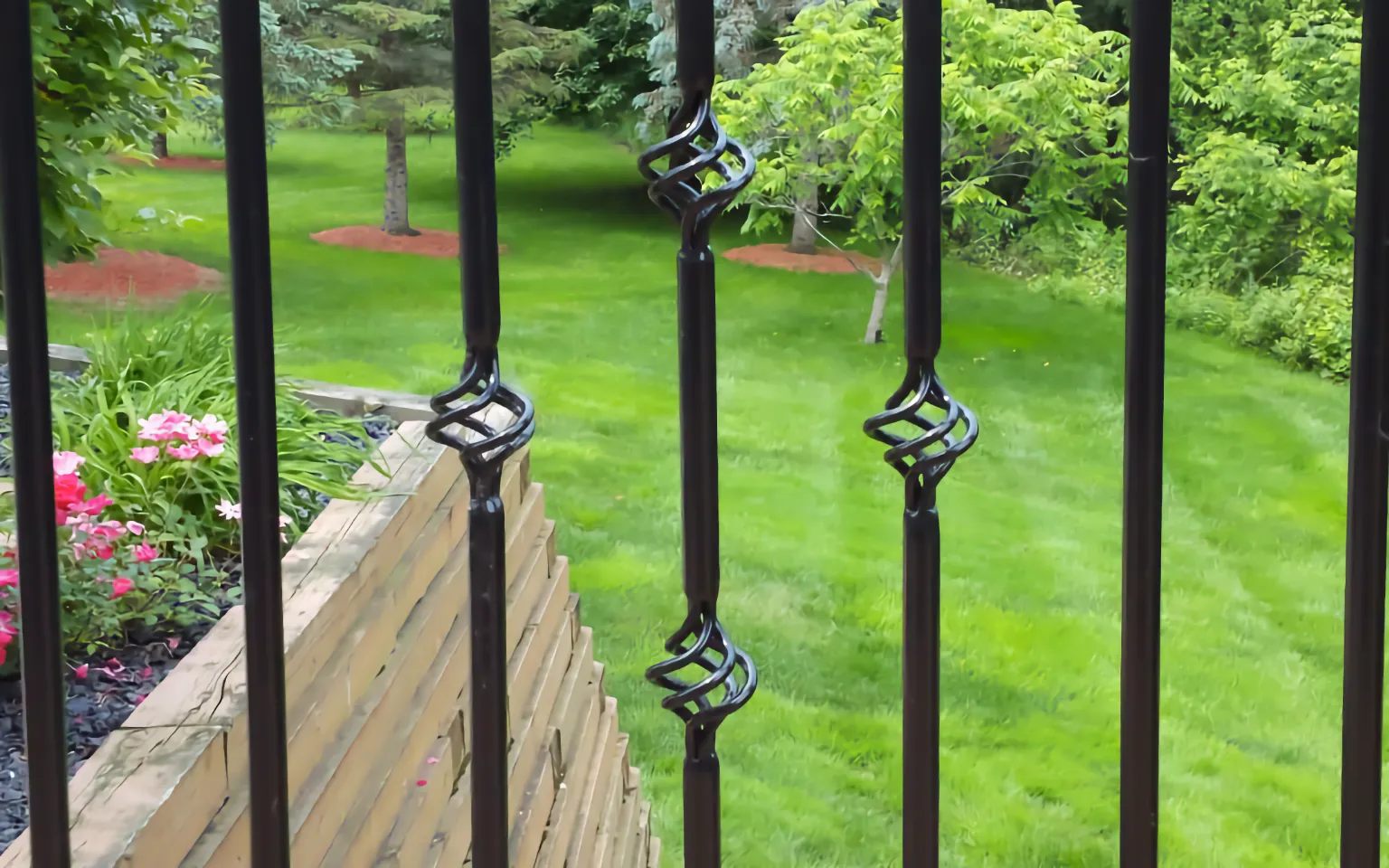
For homeowners who want something beyond a straight vertical line, decorative aluminum balusters are available in several styles: baroque (an S-curve or scrollwork shape), pot belly (a bulge in the center of the baluster), and basket twist (a woven or twisted center section). These are face-mount balusters, and they work well as accent pieces — many builders mix a decorative baluster every third or fourth position with standard round or square balusters between them. Check out our full breakdown of decorative aluminum baluster styles for design ideas and installation notes.
Color Options and How to Match Them
Aluminum balusters are available in a range of powder-coated colors. The most common options you’ll encounter are:
- Black — The most popular color by a wide margin. Black balusters virtually disappear against any backdrop, making the view through the railing the focal point rather than the railing itself.
- Matte Black — A softer, non-reflective finish that’s gaining popularity. It reads as slightly warmer than gloss black, especially in direct sunlight.
- Bronze — A strong match for brown-toned composite decking and darker wood stains. Bronze balusters pair well with earth-toned color schemes.
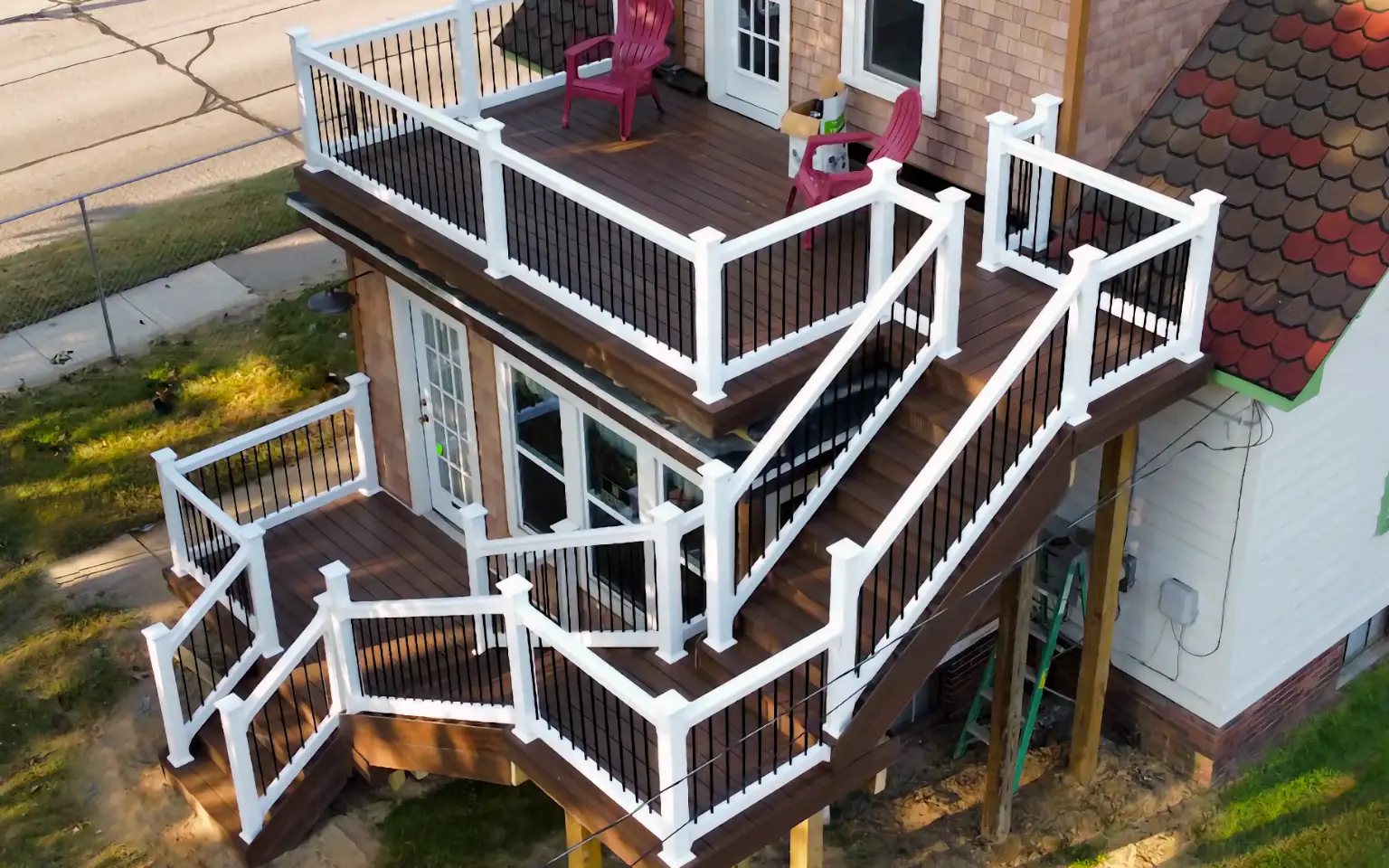
- White — The standard choice for vinyl railing systems. White balusters with white vinyl top and bottom rails create a clean, uniform look that’s common on porches and traditional-style homes.
- Wicker — A tan or khaki tone that works with lighter wood stains, cedar, and some composite colors. It’s a niche choice, but when it fits the palette, nothing else looks right.
Matching tip: The safest approach is to contrast the baluster color against the rail color rather than trying to match exactly. Black balusters with a white vinyl rail is the most classic combination. Bronze balusters with a dark composite rail blend for a monochromatic look. When in doubt, black works with everything — it’s the “goes with anything” option in deck railing.
IRC Code Requirements for Deck Balusters
Building code compliance isn’t optional, and aluminum balusters need to meet the same requirements as any other baluster material. The International Residential Code (IRC) Section R312 governs guard requirements for residential decks. Here’s what you need to know.
The 4-Inch Sphere Rule
Guards shall not have openings that allow passage of a 4-inch (102 mm) sphere between the walking surface and the required guard height. This applies to the gap between balusters, between a baluster and a post, and between the bottom rail and the deck surface. In practice, this means your on-center baluster spacing needs to result in a clear gap under 4 inches — which is why most builders space balusters at roughly 3.5″ to 3.75″ apart to allow for slight variations.
For help calculating exactly how many balusters a section requires, see our baluster spacing calculator guide.
Guard Height Requirements
The IRC requires guards on any portion of a deck that is more than 30 inches above grade. The minimum guard height for most residential applications is 36 inches, measured from the deck surface to the top of the rail. However, some jurisdictions — notably California — require 42 inches for residential, and most commercial or multi-family applications also require 42 inches under the IBC (International Building Code).
Always confirm the height requirement with your local building department before ordering materials. The difference between a 36″ and 42″ rail section changes your baluster length, and ordering the wrong height means a return or a recut.
Stair-Specific Requirements
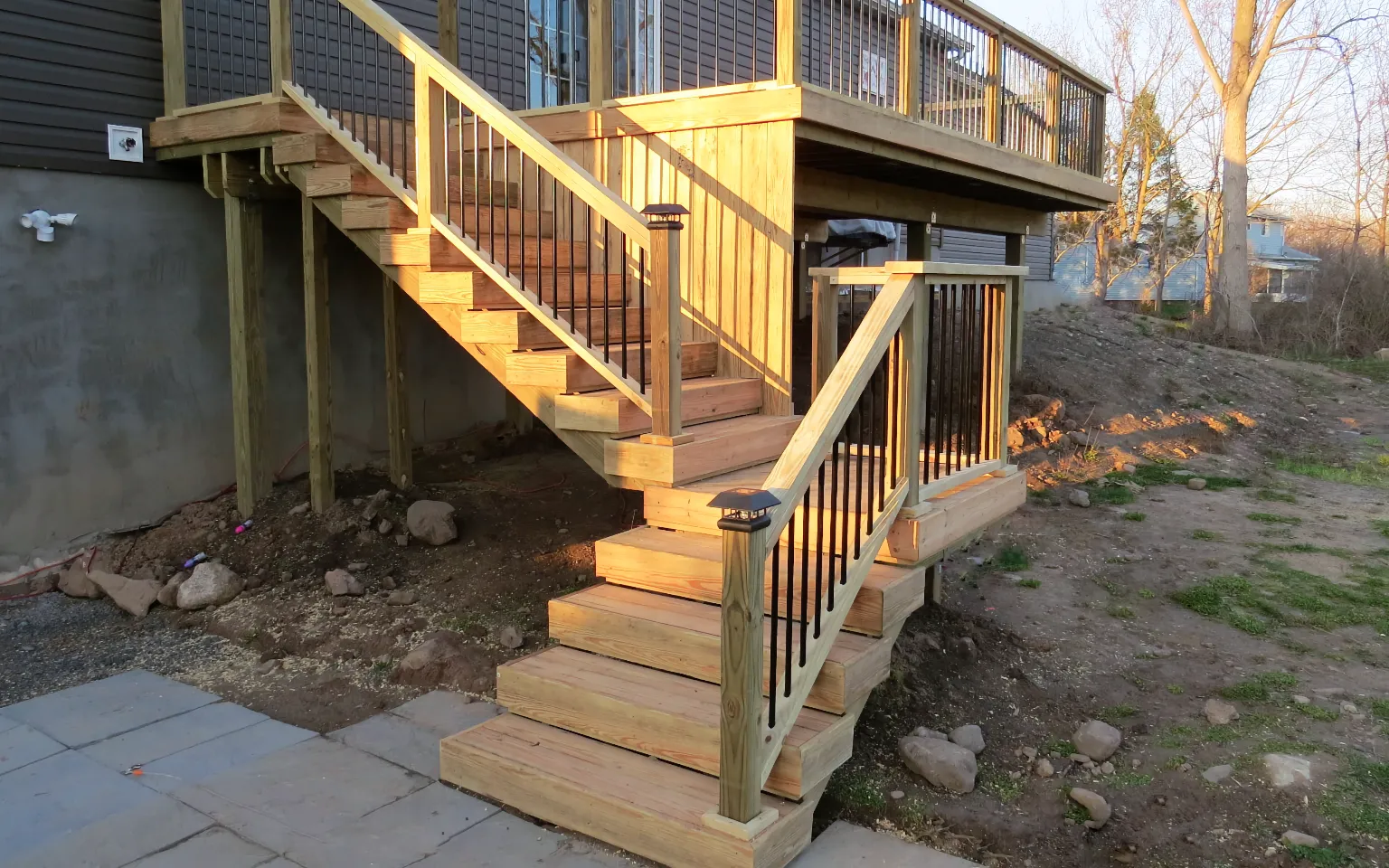
Guards on open sides of stairs must be at least 34 inches high, measured vertically from a line connecting the stair nosings. The baluster spacing rule changes slightly on stairs: the triangular opening formed by the tread, riser, and bottom rail must not allow passage of a 6-inch sphere, and openings between balusters on stairs cannot exceed 4-3/8 inches. These tolerances are slightly more forgiving than level sections, but you still need to plan your layout carefully — especially on steeper stair pitches.
Vinyl Railing vs. Wood Railing Compatibility
One of the practical advantages of aluminum balusters is that they work with both major railing system types.
Vinyl Railing Systems
Vinyl (PVC) railing systems are designed with aluminum balusters in mind. The top and bottom rails come pre-routed or use snap-in connectors that accept standard 3/4″ round or square balusters. Vinyl rail kits from most manufacturers — including the kits we sell at The Deck Barn — ship with the connectors already integrated. You cut the balusters to length, insert them into the connectors, and assemble the section. It’s a fast, clean installation with no drilling required.
Wood Railing Systems
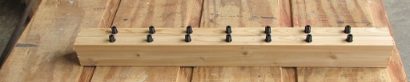
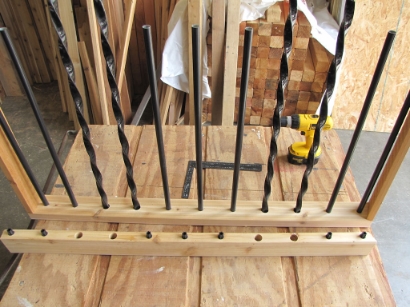
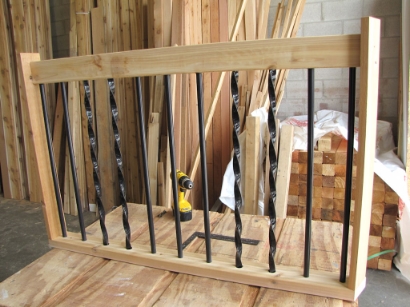
For wood top and bottom rails (whether pressure-treated, cedar, or composite), you’ll need separate baluster connectors to mount the aluminum balusters. Round balusters use round connectors (rubber grommets or snap-in fittings) that insert into drilled holes in the rail. Square balusters use square shoes that screw to the surface of the rail. This adds a step to the installation compared to vinyl kits, but the result is a more custom look — and you have full control over rail profile, wood species, and stain color.
For a complete walkthrough of installation methods for both railing types, read our aluminum baluster installation guide.
Connectors and Hardware
The connector is what attaches the baluster to the rail, and using the wrong one is a common mistake — especially for builders new to aluminum. Here’s a quick reference by profile type.
Round Baluster Connectors
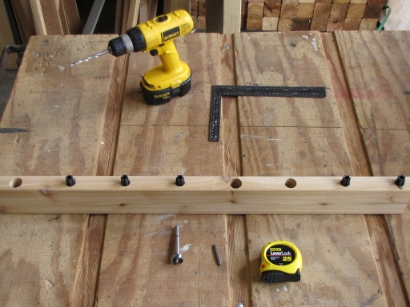
Round balusters typically use a snap-in connector or rubber grommet that fits into a 7/8″ hole drilled in the top and bottom rail. The baluster slides into the connector for a snug, rattle-free fit. Some connectors include a built-in angle adapter for stair sections.
Square Baluster Shoes
Square shoes (also called base shoes or foot blocks) are surface-mounted brackets that the square baluster drops into. They screw directly to the rail surface. Square shoes are available with flat bases for level sections and angled bases for stairs.
Flat Bar Connectors
Flat bar balusters are typically face-mounted using screws through the pre-drilled holes at each end of the baluster. No separate connector is needed — the baluster attaches directly to the face of the top and bottom rail.
Stair Adapters
Stair sections require angled connections since the balusters remain plumb (vertical) while the rails follow the stair pitch. Most connector systems offer stair adapter versions with angled seats that accommodate common stair pitches (typically 32° to 38°). If your pitch falls outside that range, you may need to notch the rail or use an adjustable connector.
We’ve written a detailed guide on aluminum baluster connectors that covers every connector type, when to use each one, and common mistakes to avoid.
Buying by the Piece vs. by the Box
This is where the purchasing experience matters — and where most suppliers make life harder than it needs to be.
The majority of big-box stores and online retailers sell aluminum balusters in pre-packed quantities: boxes of 10, 20, or 100. That sounds convenient until you calculate your actual need and end up five balusters short of a full box, which means you’re either buying a whole extra box or shorting a section and hoping the inspector doesn’t notice (don’t do that).
At The Deck Barn, we sell balusters by the piece. Need 87 round black balusters at 32-1/4″? Order 87. No overbuying, no wasted material, no leftover inventory sitting in your trailer. For builders running multiple jobs with different specs, this flexibility matters. You order exactly what you need for each job and keep your material costs tight.
We also offer custom lengths. Our standard catalog covers lengths from 8″ to 95″, but if your railing height or stair pitch calls for a non-standard cut, we can accommodate that. This is a significant advantage over retail channels where you’re limited to the three or four lengths on the shelf.
Factory Direct: What It Actually Means
The term “factory direct” gets thrown around loosely in the building products industry, so here’s what it means when we say it: Dextrusions balusters are manufactured at our facility in Wayne, Michigan. We extrude the aluminum, powder coat it in-house, cut to length, and ship from the same building. There’s no distributor, no wholesaler, and no middleman adding markup between our production line and your job site.
The Deck Barn has been in business since 1984, and we started manufacturing the Dextrusions brand in 2009. Our tagline — “By Deck Builders, For Deck Builders” — isn’t a marketing line. The company was built by people who’ve stood on scaffolding and run rail sections, and that shows in how the products are designed and how the business operates. We ship same-day on most orders, we answer the phone when you call, and we don’t require minimum order quantities.
For pro builders, factory direct pricing means better margins on every deck job. When you eliminate the supply chain markup, the per-baluster cost drops — and that difference adds up fast across a full season of builds. See our full rundown on why pros choose aluminum balusters for more on the business case.
Cost Comparison: Aluminum vs. Wood vs. Composite Balusters
Material cost is always part of the conversation, so let’s put real numbers on the table. The comparison below reflects typical 2025–2026 pricing for balusters only (not full railing systems) at standard 36″ rail height.
| Material |
Cost Per Baluster |
Est. Cost Per Linear Foot of Railing* |
Maintenance |
Lifespan |
| Aluminum (standard round) |
$1.50 – $3.00 |
$4.50 – $9.00 |
None |
25+ years |
| Pressure-treated wood |
$1.00 – $2.50 |
$3.00 – $7.50 |
Stain/seal every 2–3 years |
10–15 years |
| Composite |
$3.00 – $7.00 |
$9.00 – $21.00 |
Minimal |
20+ years |
| Decorative aluminum |
$5.00 – $12.50 |
$15.00 – $37.50 |
None |
25+ years |
*Estimated at ~3 balusters per linear foot based on standard 3.5″ spacing. Actual count depends on post spacing and layout.
Wood looks cheaper on paper until you factor in the labor and materials for ongoing maintenance. A single round of staining and sealing on a typical deck railing can cost a homeowner $200–$500, and it needs to happen every two to three years. The total cost of ownership for wood railing often exceeds aluminum within five to seven years when maintenance is included.
For builders, the real savings with aluminum are in labor time. Aluminum balusters install faster than wood — no sanding, no pre-drilling for each one, no cutting with a miter saw — and they arrive ready to install with a factory finish. On a typical 40-linear-foot deck railing, the labor difference can be an hour or more. Multiply that across a season of jobs and the efficiency gain is substantial.
For a head-to-head breakdown, see our detailed aluminum vs. wood baluster comparison.
Choosing the Right Aluminum Baluster for the Job
If you’re specifying aluminum balusters for a project, here’s a quick decision framework:
- Determine your railing type. Vinyl rail kits include connectors; wood or composite rails require separate hardware.
- Choose your profile. Round is the safe default. Square for modern builds. Decorative for accent or upscale projects.
- Confirm the height requirement. 36″ or 42″? Check your local code before ordering.
- Calculate your count. Measure each section, account for post spacing, and use the 4-inch sphere rule to determine spacing. Our baluster calculator can help.
- Pick your color. Black is the universal choice. Match or contrast with the rail color depending on the design intent.
- Order exact quantities. No reason to overbuy when you can order by the piece.
Wrapping Up
Aluminum balusters have earned their place as the standard for professional deck construction. They’re durable, code-compliant, low-maintenance, and faster to install than the alternatives. The range of profiles, colors, and connector options means they fit virtually any railing system and design style.
At The Deck Barn, we manufacture Dextrusions aluminum balusters in Wayne, Michigan and sell them factory direct — by the piece, in any length, with same-day shipping on most orders. If you’re pricing out a job or switching from wood to aluminum, give us a call or browse our full aluminum baluster catalog. We’ll help you get exactly what you need — nothing more, nothing less.