
Aluminum Balusters vs Wood Balusters for Residential Decks
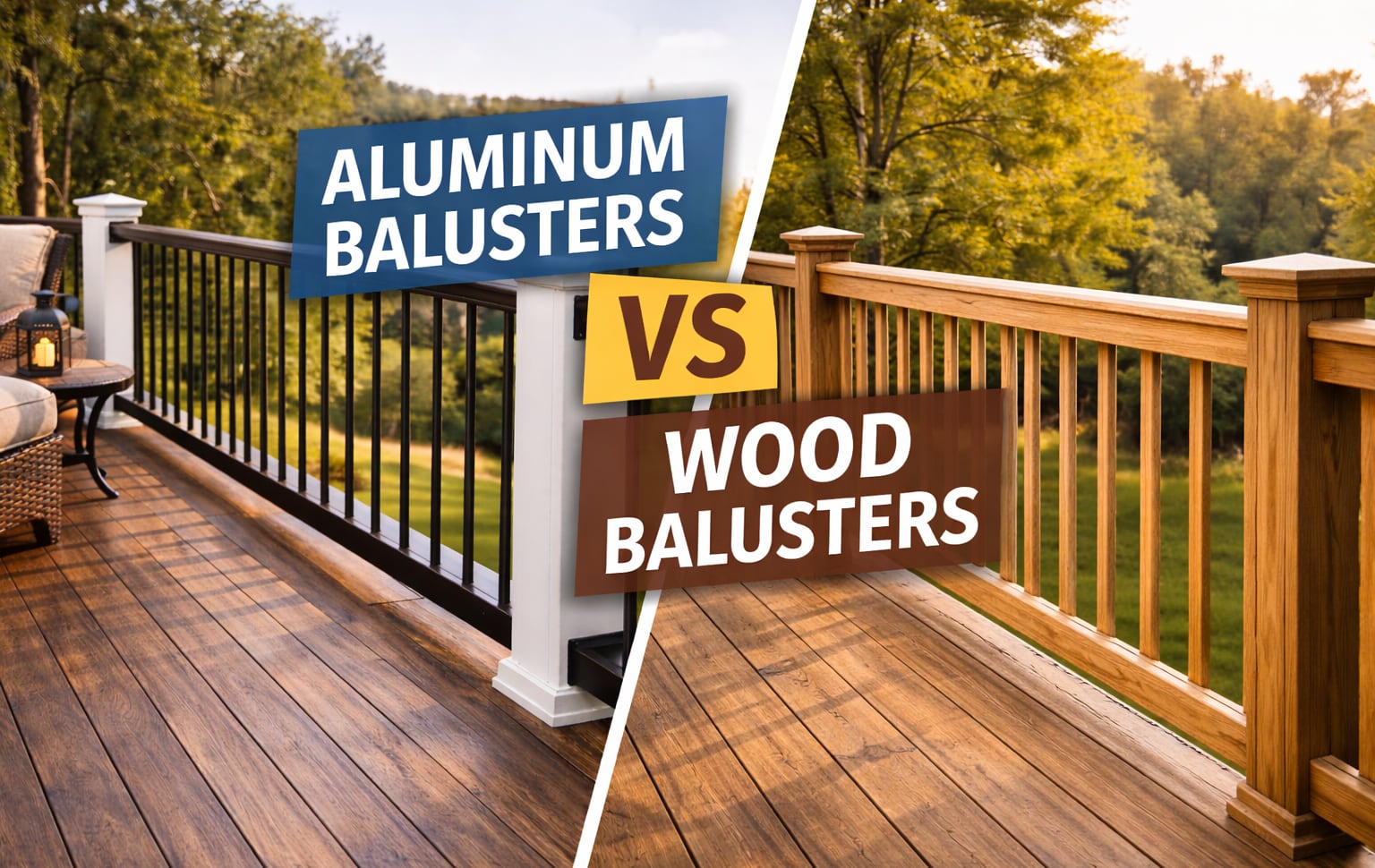
When designing a residential deck, railing choices have a major impact on safety, durability, maintenance, and overall appearance. Among the most common options are aluminum balusters and traditional wood balusters. Both materials have been widely used in residential construction, and each offers distinct advantages depending on your goals, budget, and long-term expectations.
If you’re comparing aluminum balusters vs wood balusters for residential decks, understanding performance differences is just as important as appearance.
Durability and Weather Resistance
One of the biggest differences between aluminum balusters and wood balusters is how they perform outdoors over time.
Aluminum balusters are manufactured with powder-coated finishes designed to resist corrosion, fading, and moisture damage. They do not absorb water, will not rot, and are not vulnerable to insect damage. In climates with snow, humidity, or heavy rainfall, aluminum maintains structural integrity with minimal upkeep.
Wood balusters, on the other hand, are naturally vulnerable to the elements. Even pressure-treated lumber can warp, crack, split, or rot over time. In humid or freeze-thaw environments, seasonal expansion and contraction can cause visible movement and long-term deterioration. Proper sealing and staining are required to extend their lifespan.
For homeowners seeking long-term durability with minimal intervention, aluminum balusters typically offer an advantage.
Maintenance Requirements
Maintenance is a key factor for many homeowners evaluating railing systems.
Aluminum balusters require little more than occasional cleaning with soap and water. The powder-coated finish eliminates the need for sanding, staining, or painting. Once installed, the system is largely set-and-forget.
Wood balusters demand consistent maintenance. Depending on climate exposure, they may require sealing or staining every one to three years. Paint can peel, and stains can fade, particularly in direct sunlight. Neglected wood railings can deteriorate quickly and may eventually require partial or full replacement.
For busy homeowners or those who prefer low-maintenance outdoor living spaces, aluminum balusters often present a more convenient solution.
Structural Strength and Code Compliance
Both aluminum balusters and wood balusters must meet local building codes regarding spacing, load resistance, and guard height. In the United States, deck railings are generally governed by the International Residential Code (IRC), published by the International Code Council. Homeowners and builders can reference guidance through the ICC or review deck safety resources from the North American Deck and Railing Association.
Aluminum balusters are engineered products with consistent dimensions and predictable performance. Manufacturers design them to meet load requirements and spacing standards, which can simplify inspections and approvals.
Wood balusters can also meet code, but their performance depends heavily on lumber quality and installation practices. Knots, grain direction, and moisture content can all influence strength. Proper fastening is critical to prevent loosening over time.
In most residential settings, both materials can satisfy code requirements, but aluminum provides more uniform structural reliability.
Aesthetic Considerations
Appearance plays a central role in choosing between aluminum balusters and wood balusters.
Aluminum balusters typically create a clean, modern look with slimmer profiles that preserve sightlines. They are available in several colors—commonly black, bronze, and white—and can complement composite or wood decking systems. Because they are narrow, they help maintain open views, which is especially valuable on elevated decks overlooking landscapes or water.
Wood balusters offer a traditional aesthetic. They pair naturally with all-wood deck structures and can be shaped, routed, or painted for decorative styles. For historic homes or rustic designs, wood railings may better match architectural character.
The decision often comes down to whether you prefer a modern, streamlined appearance or a classic, natural wood look.
Installation Differences
Installation methods vary between the two materials.
Aluminum balusters are often installed using pre-drilled railing systems or connector hardware. Many systems are designed for straightforward installation with consistent spacing, reducing layout guesswork. This can shorten labor time and improve overall uniformity.
Wood balusters are typically toe-nailed or fastened with screws between top and bottom rails. Achieving consistent spacing requires careful measuring and layout. Over time, wood fasteners may loosen due to expansion and contraction.
For DIY homeowners, aluminum baluster kits can offer simplicity and speed, while wood installations may require more hands-on precision.
Cost Comparison
Initial material cost can influence the decision.
Wood balusters generally have a lower upfront material cost. However, long-term expenses should be considered. Ongoing staining, sealing, and potential replacement add to the total cost of ownership.
Aluminum balusters may cost more initially but typically incur fewer maintenance expenses. Over a decade or more, they can become cost-competitive or even more economical due to reduced upkeep and longer lifespan.
Evaluating both short-term and long-term costs provides a clearer financial picture.
Environmental Considerations
Sustainability may also factor into your choice.
Wood is a renewable resource, especially when sourced from responsibly managed forests. However, treated lumber contains preservatives, and repeated staining or sealing introduces additional chemicals over time.
Aluminum is recyclable and often contains recycled content. Its longevity reduces replacement frequency, which can lower overall material consumption across the life of the deck.
Builders interested in environmental impact may wish to review sustainable building guidance from industry groups such as the American Wood Council for lumber standards and structural information.
Which Option Is Right for Your Deck?
When comparing aluminum balusters vs wood balusters for residential decks, the right choice depends on priorities.
Choose aluminum balusters if you value:
- Low maintenance
- Long-term durability
- Clean, modern aesthetics
- Consistent structural performance
Choose wood balusters if you prefer:
- Traditional styling
- Lower initial cost
- Custom shapes or painted finishes
- A fully wood deck appearance
Both materials can create safe, attractive railings when properly installed according to local building codes. By weighing durability, maintenance, appearance, and long-term value, homeowners can select a railing system that aligns with their design goals and lifestyle.
If you’re planning a deck project, reviewing local code requirements and consulting professional builders can help ensure your railing system meets safety standards while achieving the look you want.
